Demystifying Offshore Business Formations: Exactly How They Operate and What to Anticipate
Offshore company formations can appear facility and enigmatic. Offshore Company Formations. These entities, usually developed for tax obligation advantages and privacy, run under special legal frameworks. Entrepreneurs might locate themselves maneuvering through a maze of guidelines and compliance requirements. Recognizing the complexities is essential for success. What are the real benefits? What are the potential challenges? A closer assessment discloses the nuances that can affect decision-making significantly
Comprehending Offshore Companies: Kinds and interpretations
Offshore companies are entities developed in a jurisdiction beyond a person's or organization's main country of house, often for purposes connected to tax optimization, property security, or regulatory advantages. These business can take various types, including restricted liability firms (LLCs), global service companies (IBCs), and offshore depends on. Each type serves specific features and attract various demands.
Restricted responsibility business provide proprietors with protection from personal responsibility, while international service companies are prominent for their adaptability and minimal reporting needs. Offshore depends on, on the various other hand, are utilized mostly for estate planning and possession protection.
The choice of territory significantly affects the firm's procedures, as some places use a lot more desirable lawful structures and privacy defenses. Offshore Company Formations. Recognizing the distinctions between these types is crucial for individuals and services considering overseas structures, as each alternative lugs different ramifications for governance and conformity
The Benefits of Establishing an Offshore Business
Developing an overseas firm can provide various advantages, especially for those looking for to enhance their monetary methods and shield their possessions. One substantial benefit is tax optimization; numerous territories supply favorable tax rates or exceptions, permitting companies to retain even more earnings. In addition, overseas business can offer a layer of personal privacy, shielding the identities of proprietors and shareholders from public examination.
Another advantage is property defense. By putting possessions in an offshore entity, people can guard their riches from possible lawful claims or political instability in their home nations. This framework additionally helps with international organization procedures, allowing easier accessibility to global markets and diverse clientele.
Additionally, the facility of an overseas company can enhance reputation and status, attracting clients that value global company practices. Generally, these benefits make offshore company formations an attractive option for companies and individuals intending for financial growth and safety and security.
Trick Considerations Prior To Creating an Offshore Entity
Prior to creating an overseas entity, several vital aspects must be analyzed. Lawful compliance demands, tax obligation implications and benefits, as well as territory option, play a significant function in the decision-making procedure. Recognizing these factors to consider can help services and people browse the complexities of overseas firm formations effectively.
Lawful Conformity Needs
When thinking about the development of an offshore entity, recognizing legal conformity requirements is important to assure adherence to both global and local laws. Prospective company owner need to acquaint themselves with policies controling company registration, reporting responsibilities, and operational standards in the selected jurisdiction. This consists of validating the legal requirements for investors and directors, as well as making sure conformity with anti-money laundering (AML) and know-your-customer (KYC) guidelines. Additionally, businesses need to remain conscious of any kind of licensing requirements specific to their market. Involving local lawful and economists can offer important insights, ensuring that all necessary documents is prepared and sent properly. Inevitably, comprehensive understanding of lawful conformity aids mitigate risks and promotes a sustainable offshore operation.
Tax Ramifications and Benefits
Numerous company owners consider the tax ramifications and advantages of developing an overseas entity as a critical factor in their decision-making procedure. Offshore firms can offer considerable tax obligation advantages, such as decreased corporate tax rates, exception from certain neighborhood tax obligations, and the capability to delay taxes on foreign income. These advantages can bring about boosted productivity and capital, making overseas structures appealing for worldwide company operations. In addition, the capacity for tax obligation treaties might additionally lessen tax liabilities. It is important for service owners to comprehend the intricacies included, consisting of compliance with both worldwide and local tax obligation regulations. Involving with tax specialists is a good idea to navigate these details successfully and guarantee suitable tax obligation planning approaches.
Jurisdiction Option Elements
What elements should one take into consideration when picking a territory for offshore company formation? Secret factors to consider consist of tax obligation performance, governing setting, and political security. Jurisdictions with desirable tax regimens can significantly impact productivity. The governing landscape ought to offer adaptability and convenience of conformity, permitting reliable business operations. Political stability is essential, as it guarantees the safety and security of possessions and connection of procedures. Additionally, the track record of the territory can influence client depend on and company connections. Availability to financial services and the availability of professional assistance solutions are additionally important. Lastly, comprehending local legislations relating to possession, personal privacy, and coverage demands is vital to ascertain that the offshore entity lines up with business owner's goals and lawful obligations.
The Refine of Setting Up an Offshore Company
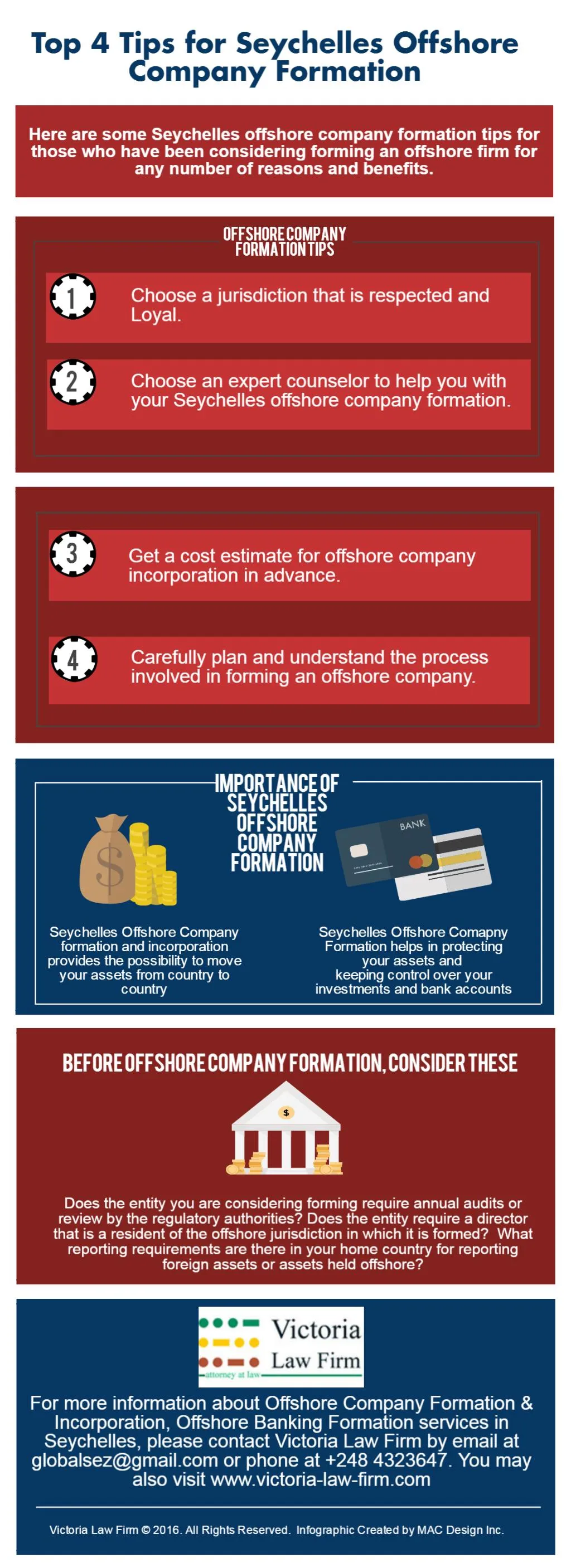
Establishing an offshore firm includes a series of strategic actions that need careful preparation and compliance with international laws. A specific must select an ideal jurisdiction that straightens with their company purposes and provides desirable tax advantages. Adhering to jurisdiction choice, the following step is to pick a special business name and prepare the required documents, including write-ups of incorporation and investor arrangements.
As soon as the documentation prepares, it must be submitted to the pertinent authorities along with the needed costs. After approval, the business will certainly obtain a certificate of consolidation, formally developing its lawful existence. The specific have to after that open a business savings account to promote financial deals.
Keeping an overseas business involves adhering to recurring conformity requirements, such as yearly coverage and tax commitments, which differ by jurisdiction. Therefore, understanding each step is important for an effective offshore company formation.
Regulative and legal Framework for Offshore Companies
While developing an offshore firm can use considerable benefits, it is vital to maneuver through the complex lawful and regulative framework that governs such entities. Each territory has its own collection of regulations that dictate whatever from business formation to taxes and compliance demands. These policies are designed to avoid prohibited activities, such as cash laundering and tax evasion, and frequently require thorough documents and openness.
Crucial element of this structure include the requirement of designating neighborhood directors, maintaining an authorized office, and sticking to yearly reporting commitments. Additionally, several jurisdictions impose details licensing requirements for certain service tasks. Recognizing these legal terms is critical for making certain compliance and mitigating threats connected with charges or lawful disputes. Subsequently, involving with lawyers that focus on offshore business can help in steering via this detailed landscape, ultimately assisting in a effective and certified offshore business operation.
Usual Mistaken Beliefs Concerning Offshore Firms
Many individuals hold mistaken beliefs regarding Visit Your URL offshore companies, typically relating them with tax obligation evasion and prohibited tasks. Nonetheless, it is very important to recognize that these entities can operate lawfully within a framework developed for reputable organization techniques. Making clear the lawful standing of overseas business can assist eliminate these myths and promote an extra exact understanding of their function.
Tax Evasion Myths
In spite of the growing appeal of overseas firms, misconceptions concerning their use for tax evasion linger. Several individuals incorrectly believe that developing an overseas entity is exclusively a way to avoid taxes. Overseas companies are frequently used for legit objectives, such as possession security, worldwide organization development, and investment diversification. The assumption that all overseas activities correspond to immoral tax obligation evasion ignores the intricacies of worldwide tax guidelines and compliance demands. Additionally, the large bulk of overseas territories have applied steps to deal with tax evasion, promoting openness and information exchange. This mischaracterization can prevent reputable companies and capitalists from checking out the potential advantages of offshore business formations while bolstering a negative stigma bordering these entities.
Lawful Status Clarified
The legal standing of overseas companies is commonly misunderstood, causing a variety of mistaken beliefs. Many believe these entities run in a lawful gray area, presuming they are inherently illegal or unethical. Actually, overseas business are genuine services created under the regulations of details jurisdictions, created for numerous factors, consisting of property defense and market development. Another common misconception is that offshore companies escape tax obligations totally; nonetheless, they go through the guidelines and tax responsibilities of their home countries. Additionally, some people assume that overseas firms can be conveniently manipulated for money laundering or prohibited tasks. While misuse can take place, the majority of territories implement stringent conformity and transparency legislations to reduce such risks, guaranteeing that overseas business operate within lawful structures.

Handling and Operating Your Offshore Firm Properly
Effectively taking care of and operating an offshore company requires a tactical method that balances compliance with regional guidelines and the search of organization objectives. Effective overseas monitoring involves understanding the jurisdiction's tax obligation laws, reporting requirements, and operational policies. Employing regional professionals, such as accountants and legal advisors, can supply very useful understandings right into traversing these intricacies.
Additionally, establishing clear communication channels and operational protocols is vital for maintaining performance. Making use of innovation for project management and cooperation can boost efficiency, while routine performance reviews warranty placement with critical goals.
Preserving robust economic documents is essential, as openness promotes trust with stakeholders and complies with global requirements. Finally, being versatile to modifications in regulations or market conditions permits offshore companies to pivot efficiently, assuring long-lasting sustainability and development. By sticking to these principles, entrepreneur can maximize the benefits of their offshore ventures while mitigating dangers.
Often Asked Inquiries
Just how Much Does It Expense to Maintain an Offshore Business Each Year?
The price to maintain an offshore business every year varies considerably, typically ranging from $1,000 to $5,000, relying on jurisdiction, services needed, and conformity commitments. It is important to take into consideration extra charges for details requirements.
Can I Open a Checking Account for My Offshore Business From Another Location?
Opening a checking account for an overseas firm remotely is typically possible. Nevertheless, demands might differ by territory, frequently requiring documents and confirmation procedures, which can make complex the remote application experience for individuals.
Are There Certain Countries Understood for Easier Offshore Business Formations?
Particular countries, find such as Belize, Seychelles, and the British Virgin Islands, are renowned for their streamlined processes and favorable laws pertaining to offshore company developments, attracting business owners looking for performance and privacy in organization procedures.
What Types of Businesses Are Finest Suited for Offshore Firms?
Specific companies, such as shopping, financial investment, and consultancy companies, frequently profit from offshore companies as a result of tax benefits, privacy, and regulative flexibility - Offshore Company Formations. These entities commonly flourish in territories that promote favorable service environments
Exactly How Can I Make Certain Compliance With Regional Laws When Operating Offshore?
To assure conformity with regional regulations when operating offshore, it is vital to engage lawful experts, conduct detailed research on territory regulations, and preserve transparent monetary records, thus decreasing dangers connected with non-compliance.